
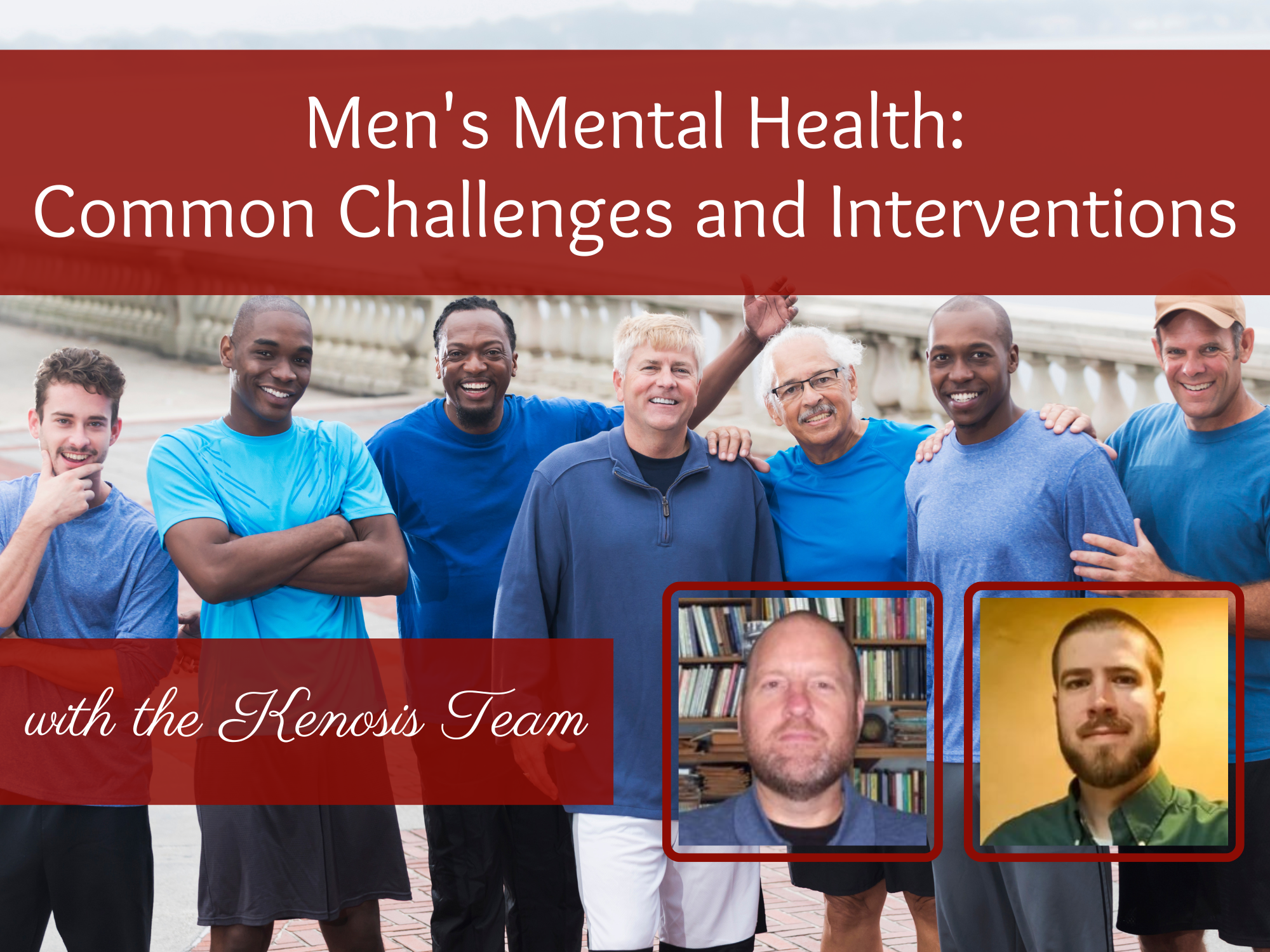
June marks Men’s Health Month, an observance dedicated to raising awareness about health conditions that affect boys and men. Of course, mental health is an important component of overall health and wellness, with mental health challenges often having a detrimental effect on physical health. And since mental health is our specialty here at Kenosis, we wanted to take this opportunity to shine a light on common challenges in men’s mental health.
Men experience many of the same mental health disorders as women, such as depression, anxiety, bipolar disorder, post traumatic stress disorder, schizophrenia, and others. However, men’s lived experience with these disorders and with other mental health challenges can differ dramatically from the experience of women. This divergence is due in large part to differences in cultural expectations and how each gender is socialized throughout youth and adulthood.
To better explain some of the unique mental health challenges men face today, we spoke with four male counselors on our staff. They are Dan Miller, MA, LMHC, staff psychotherapist; Richard Paul, MSW, LSW, staff psychotherapist; Tyler Curtis, Marriage and Family Therapist intern; and Jackson Kisor, Marriage and Family Therapist intern. The four vary widely in age, with approximately four decades separating the youngest and oldest, which provides a helpful generational insight on men’s changing needs over time.
Below, they unpack some of the most common ways men struggle today and explain how compassionate, tailored counseling can transform men’s lives by making them feel heard, understood and supported.

Common Challenges in Men’s Mental Health
As we said above, many of the unique mental health challenges that men face are rooted in gender-related expectations and life experiences. Here are the four most common challenges that our counselors identified.
1. “Suffering in Silence” and Self‑Medication
In many cultures, men are expected to absorb life’s hardships, both physical and emotional, without complaint. Dan observes, “We are taught to ‘man up.’ ” As a result, “a male might be reticent to express his emotions or seek help through mental health counseling. The need for help and support might be seen as a sign of weakness.”
This perceived societal expectation to “suffer in silence” can lead to a variety of negative health consequences. Rich explains, “Many men have never learned how to identify feelings and connect those feelings with behavior, let alone communicate said feelings to friends, family, or significant others.”
When men do not feel comfortable opening up emotionally, they may resort to self-destructive behaviors in order to dull or drown out their troubles. “I work with clients who have addictive behaviors such as alcoholism, drug use, pornography use, etc. This often negatively impacts the overall quality of family roles, job performance, health and wellness,” Rich says.
Dan adds, “Studies have shown that men are less likely to seek counseling for mental health challenges such as depression and anxiety. Additionally, men are four times more likely to complete suicide than women.”
2. Unresolved Childhood Trauma
Just as is the case with women, many mental health challenges in men can stem from past traumatic experiences, especially those experienced in childhood. The difference is that men may feel even more shame about acknowledging the trauma than women.
“Historically in our culture, men have not felt comfortable being vulnerable and seeking help,” Rich reiterates. “Once a client commits to attending therapy sessions, it is incredibly common to uncover unresolved childhood trauma.“
Common sources of trauma among men include parental abuse, maladaptive family dynamics, and issues with codependency. Post traumatic stress resulting from extreme acts of violence can also be found among men who served in the military or have been involved in the criminal justice system.
On top of the emotional damage caused by traumatic events, men often run the risk of repeating or perpetuating them. Rich explains, “Until these issues are addressed, you will often observe the same cycles repeating themselves to some degree in their adult relationships, without the healthy tools to problem-solve.”
3. Unmet Need for Achievement or Adventure
Men more so than women have traditionally been socialized to strive for achievement and adventure. When men feel unable to obtain these things or are criticized for doing so, it can create strong feelings of unfulfillment.
“This may sound odd, but men desire to do unsafe things,” Tyler says. “This does not mean purely illegal or harmful activities, but things that stretch their ability to handle stressful events. These activities offer purpose and refinement of skills, and they are purposefully uncomfortable.”
As Tyler explains, feelings of safety and comfort can paradoxically work against men’s socialized desire for adventure. “Purposeless comfort disguised as safety can negatively impact all facets of men’s lives and manifest as depression, anxiety, or even frustration with close family and friends,” he says.
Perhaps most troubling, men who find themselves in this position may intentionally seek out risky behaviors rather than channeling their desires in a constructive way. “It is likely that they will try to make problems that they can then solve. However, such a process is purposeless in the long run and will not bring satisfaction,” Tyler says.
4. Feeling Misunderstood or Rejected
Younger men in particular have begun to express feeling misunderstood or rejected by society in recent years. As a perceived societal emphasis has been placed on supporting women, some men are feeling overlooked by comparison.
“Men often feel depressed, purposeless, and alone because they feel rejected by society and more especially by the people closest to them,” Jackson explains. These feelings of rejection can cause men to turn inward, increasing their isolation from others.
Some of these feelings stem from changing gender norms and the postponement of milestones that are traditionally associated with masculinity. As men are beginning careers, getting married, and having children later or not at all, some are left wondering what role they are supposed to fill in the world. “Put simply, this lack of clarity creates confusion surrounding what it means to be a man,” Jackson says.
To make matters worse, when men speak out about these struggles, the old expectation to suffer in silence often emerges. “Men are often encouraged to express their emotions and be vulnerable, but then are socially punished for doing so. This cycle causes men to become closed off and scared of emotional intimacy,” Jackson explains.

Effective Counseling for Men’s Mental Health Challenges
Now that we understand some of the core challenges impacting men’s mental health, what kind of counseling interventions can be used to address them? Some look similar to counseling best practices for persons of any gender, while others are more tailored to men’s specific challenges and needs.
Here are three effective practices that our therapists emphasize.
1. Creating a Safe and Empathetic Counseling Environment
For both men and women, the first goal of counseling should be to create a sense of safety and support. “I find that creating a safe space for non-judgemental dialogue is a good starting point for men and women alike,” Rich says.
However, Dan points out that creating this supportive environment can be especially crucial for men, because it might be the first time in their lives they have ever experienced it. “Again, we men have been conditioned to tamp down our emotions. I take a person centered approach that emphasizes empathy and unconditional positive regard.”
Even in this environment, it might take time for men to feel truly comfortable opening up to their counselor. But as they begin to trust that they won’t be criticized or belittled for sharing their emotions, they will usually become more comfortable participating in counseling.
2. Normalizing and Naming Emotional Patterns
Because men who enter counseling may have never compared their emotional experiences with their peers, it’s vital for counselors to normalize their challenges. This might involve helping them identify emotions and explaining how relatable their feelings truly are.
Dan says, “I attempt to establish therapeutic rapport by assuring men that I can relate to day-to-day challenges by providing a few examples of my own.” When men see that another trusted male can empathize with their experiences, they tend to feel less alone and ashamed of their perceived shortcomings.
Part of normalizing experiences involves educating men on toxic behavior patterns that may have contributed to their issues, and which they might be unconsciously perpetuating.
As Rich explains, “Expanding awareness with the intent of breaking toxic generational patterns (i.e., family addiction, social drinking, isolation, poor communication, infidelity, etc) tends to be an effective pillar for success when working with men.” Once men understand how certain behaviors are detrimental to their happiness, they will be more willing to work on changing them.
3. Cultivating Purpose, Competence and Responsibility
As we mentioned above, many men express a profound need for achievement and purpose in their lives. “As an Internal Family Systems practitioner, I have found that men often yearn for a more fulfilling answer than to arrive at an inner feeling of contentment,” Tyler explains. “I believe that this is due to a desire for something more meaningful than a sense of safety.”
Jackson adds, “Men and boys tend to care more about feeling respected than being emotionally validated. Phrases like ‘But you ARE worth it’ and ‘It’s OK to feel sad’ tend not to land because they feel patronizing.”
In addition to validating emotions, effective counseling for men helps them to feel empowered. Jackson explains, “Matter of fact phrases that validate the client’s competence such as, ‘Do you have any ideas or insights into that?’, or ‘When you’ve been upset in the past, how does everyone else react?’ tend to land better in my experience.”
Even better, counseling can be a powerful tool to help men build the sense of purpose and responsibility they often crave, especially among younger men who may still be struggling to meet these needs.
“Men and boys tend to respond better when they are given opportunities to take on new responsibilities. When you paint a picture of how a man can fill a role and become irreplaceable to others, it tends to encourage him and lead to therapeutic success,” Jackson says.

How to Start a Conversation About Men’s Mental Health
Considering everything we’ve discussed above, we asked our therapists how they would encourage men to consider seeking counseling if they felt it would be helpful.
Dan once again expressed that he would emphasize his ability to relate to any challenges they might be facing. “At the appropriate time, I would share that I have sought counseling myself and have benefited as such,” he adds.
Rich shared that he would appeal to their desire for change. He explains, “I would ask if they consider what they are experiencing to be problematic. I would ask the basic question, ‘Do you wish things to be different, and how?’ If the answer is yes, then I would encourage them to abandon any preconceived ideas, stereotypes, or stigmas regarding seeking counseling, and assure them that sessions are conversational and confidential, and that everyone can benefit from therapy.”
Tyler would present counseling as a way to create a sense of purpose and achievement in life. “While therapy can often be portrayed as a way to ‘talk things out’ or feel better about yourself, it has the potential to make you far more capable than you are now,” he says. “This type of improvement will be evident in the way you interact with family, friends, or work. More than that, it can help you find a meaningful direction for your life.”
Finally, Jackson would speak to the benefits of counseling in a matter of fact way he believes would resonate with boys and men: “Therapy can help you get perspective on your life from a well-trained third party and consider simple things you may be missing that are preventing you from being happy.”